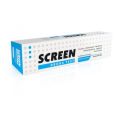

Screen Drug Test Saliva 6Drug

You save €1.52 compared to the retail price
Any questions? Write to us on WhatsApp 100% Authentic Product
 Insure your shipment for only €5.00
 Pay on delivery directly in cash.
 Easy and fast returns within 7 working days.
 Select Priority Shippingin checkout: your package will be prepared first!
Shipping costs (islands excluded) 1.99€ (for orders over 25€)
SCREEN
DRUG TEST
SALIVA 6
Precautions
• Product not intended for medical or diagnostic use.
• Do not use beyond the expiration date.
• Store the reactive strip panel in the sealed wrapper until use.
• Keep in sealed wrapper until use.
• Saliva is not classified as a biohazard if it does not result from a dental procedure.
• The collector and the used Card must be disposed of in accordance with current regulations.
Intended use and summary
Chromatographic immunological test for the qualitative detection of multiple drugs and metabolites in saliva at the following threshold-limit concentrations:
| Test | Calibrator | Threshold-limit (ng/ml) |
| Amphetamine (AMP) | D-Amphetamine | 40 |
| Methamphetamine (MET) | D-Methamphetamine | 40 |
| Marijuana (THC) | 11-nor-Δ9-THC-9 COOH | 10 |
| Cocaine (COC) | Benzoylecgonine | 30 |
| Opiates (OPI/MOP) | Morphine | 40 |
| Ecstasy (MDMA) | D,L-methylenedioxymethamphetamine | 50 |
This test provides only preliminary analytical data.
More specific chemical methods should be used to confirm the analytical result.
Gas chromatography and mass spectrometry (GC/MS) are considered preferable confirmation methods.
Each result for the determination of the presence of drugs of abuse must be related to clinical considerations and professional judgment, especially when the preliminary result is positive.
Rapid urine screening test that does not require the use of special instruments.
The test uses antibodies to selectively detect high levels of specific substances in human saliva.
The detection times are approximate for each substance as they vary based on frequency of use, body mass, age, health status, and tolerance to drugs.
The product detects the presence of drugs in saliva only after their metabolism.
COCAINE (COC)
Cocaine is a powerful stimulant of the central nervous system as well as a local anesthetic derived from the coca plant.
The substance is often self-administered by inhalation or intravenous injection or by smoking the freebase.
AMPHETAMINE (AMP)
Amphetamine is a substance also used for therapeutic purposes.
The substance is often self-administered by inhalation or ingestion.
High doses produce enhanced stimulation of the central nervous system and induce euphoria, a vigilant state, appetite suppression, a sense of increased energy and strength.
More acute reactions produce anxiety, paranoia, hallucinations, and psychotic behavior.
METHAMPHETAMINE (MET/MDMA)
Methamphetamine is a powerful stimulant chemically related to amphetamine, but with a greater capacity to stimulate the central nervous system.
The substance is often self-administered by inhalation, smoking, or ingestion.
MARIJUANA (THC)
Tetrahydrocannabinol is the active ingredient of cannabis.
When smoked or taken orally, THC produces euphoria.
Regular consumers have short-term memory damage and learning delays, and may also experience transient episodes of confusion and anxiety.
Long-term heavy use may be associated with behavioral disorders.
OPIATES (OPI)
The class of opiates refers to any substance derived from the opium poppy, including natural compounds such as morphine, codeine, and semi-synthetic substances like heroin.
Opiates act on pain control by depressing the central nervous system.
Withdrawal symptoms may include sweating, tremors, nausea, and irritability.
Opiates can be taken orally or by intravenous, intramuscular, and subcutaneous injection.
Consumers may also take the substance via intravenous or inhalation.
ECSTASY (MDMA)
Synthetic drug, first synthesized in 1914 by a German pharmaceutical company for the treatment of obesity.
Regular users report side effects such as increased muscle tension and sweating.
MDMA is not a true stimulant, although it shares with amphetamines the ability to raise blood pressure and heart rate.
MDMA produces some perceptual variations such as increased sensitivity to light, difficulty concentrating, and blurred vision in some users.
Its mechanism of action is thought to occur through the release of the neurotransmitter serotonin.
MDMA can also release dopamine, although it is commonly believed that this is a secondary effect of the substance (Nichols and Oberlender, 1990).
The most manifest effect of MDMA, which potentially occurs in everyone who has taken a reasonable dose of the substance, is jaw clenching.
The test for MDMA contained in the product provides a positive result when the concentration of MDMA in saliva exceeds 50 ng/ml.
PRINCIPLE
It is an immunological test based on the principle of competitive binding.
The drugs that may be present in the oral fluid sample compete against the respective conjugates for binding sites on the specific antibody.
During the test, part of the saliva sample migrates upwards due to capillary action.
A drug, if present in the oral fluid sample below the threshold-limit concentration, will not saturate the binding sites of this specific antibody.
The antibody will thus react with the drug-protein conjugate, and a visible colored line will appear in the test area for the specific drug tested. The presence of the drug above the threshold-limit concentration will saturate all the binding sites of the antibody.
Therefore, the colored line will not form in the test area.
A positive oral fluid sample will not generate a colored line in the specific test area of the strip due to drug competition, while a negative oral fluid sample for the drug will generate a line in the test area due to the absence of competition.
For procedural control purposes, a colored line will always appear in the control area, indicating that a correct volume of sample has been poured and that the membrane has been adequately saturated.
REAGENTS
The test contains membrane strips coated with drug-protein conjugates (purified bovine albumin) on the test line, a polyclonal goat antibody against gold-protein conjugate on the control line, and an imbibed buffer containing colloidal gold particles coated with monoclonal mouse antibody specific for Amphetamine, Methamphetamine, Cocaine, Opiates, Δ9-thc-cooh, Methadone, Ecstasy, and synthetic Marijuana.
STORAGE AND STABILITY
Store in the original sealed package at 2-30°C.
The test is stable until the expiration date printed on the package.
The test must remain in the sealed package until use.
Do not freeze.
Do not use beyond the expiration date.
SAMPLE COLLECTION AND PREPARATION
The oral fluid sample should be collected using the collector provided with the kit.
Follow the detailed instructions below.
Do not use other collection devices for analysis.
Oral fluid can be collected at any time of the day.
INSTRUCTIONS FOR USE
Bring the test, the sample, and/or controls to room temperature (15-30°C) before testing.
Inform the donor not to put anything in their mouth, including food, drinks, gum, or tobacco, for at least 10 minutes before collection.
1. Bring the package to room temperature before opening. Remove the test from the sealed package and use it within one hour.
2. Remove the cap from the test and place the absorbent tip in the mouth, under the tongue, to collect saliva until the control line appears. Remove the test.
3. Place the test on a clean, flat surface. See illustration below. 4. Read the results after 10 minutes. Do not read the results after 1 hour.
INTERPRETATION OF RESULTS
Negative*: all test bands appear. A colored line must be in the control area (C), while another must be adjacent to the test area (Substance/T). The negative result indicates that the concentration of the substance is below the detectable level or absent.
*the shade in the test area (Substance/T) may vary, but it should also be considered negative if a faintly colored line appears
Positive: only one colored line appears in the control area (C). No test band appears in the test area (Substance/T). The positive result indicates that the concentration of the substance is above the detectable level.
Invalid: no control line appears. The most likely reasons for the absence of the control line are insufficient sample volume or incorrect procedural techniques. Check the procedure and repeat the test using a new card.
If the test results are positive, avoid aggressive behaviors and calmly seek dialogue with the person involved. Consult your doctor, a psychologist, or contact the local competent service.
QUALITY CONTROL
The test includes a procedural control.
The line that appears in the control area (C) is considered an internal procedural control.
It confirms that a sufficient sample volume was used, adequate membrane saturation, and proper procedural technique.
LIMITATIONS
1. The test provides only a preliminary qualitative analytical result. A secondary analytical method is needed to confirm the result. The recommended confirmation method is gas chromatography/mass spectrometry (GC/MS).
2. A positive result in the test does not indicate the concentration of the substance in the sample or the route of administration.
3. A negative result may not necessarily indicate a drug-free sample. Negative results may occur when the drug is present below the test threshold limit.
4. It is possible that technical or procedural errors, as well as interfering substances present in the saliva sample, may cause erroneous results.
5. This test does not distinguish between drugs of abuse and some medications.
FORMAT
• 1 pad.
• 1 Drug Test Saliva 6.
• instruction leaflet.
| Disponibile in 24/48 ore | No |
|---|---|
| Condizioni di Conservazione | DA +2 A +30 GRADI |
| Validità Confezione Integra | 24 MESI |
Product reviews
There are no reviews for this product yet.
Frequently Asked Questions
Can I order a medication prescribed by my doctor?
Unfortunately, it is not possible to purchase prescription medications on the website.
Can I order a product that is out of stock?
Yes, you can order it if it is available from the warehouses we source from and have it available within half a day.
How can I know if my order was successful?
You will receive an order confirmation email at the email address you provided in the cart. If you created an account on the Pillola Store website, you will find all the details of your order in the "My Account" area under "Recent Orders".
How much does payment cost?
If you choose to pay with a credit card or PayPal, there are no additional payment fees. However, if you prefer to pay cash on delivery, there is an additional cost of €4.00, which will be added to the total order amount. You can then pay the total amount in cash to the courier upon delivery. For bank transfer payments, there are no additional costs in the order, but your bank may apply its usual transfer fee.
How can I know when my order will arrive?
You can track your order shipment using the tracking code you will receive via email. The courier will make two delivery attempts, after which the package will be stored at the nearest GLS office. In this case, you will need to pick up the package from the office to avoid the order being returned to us and incurring additional costs.
Can I return a product?
Of course, if you are not satisfied with a product, you can return it within 14 days from the delivery date. If you wish to return a product, you can send back the unopened, unused, and undamaged product. For the shipment, you can choose a courier of your choice at your expense, send it back to us, and once the product's condition has been checked, the product amount will be refunded. If the returned product is not in perfect condition, the product amount cannot be refunded. Shipping costs for the original order will not be refunded. In case of delivery errors, the return will be completely at our expense.
Can I expedite the shipping of the product?
Of course! With Priority Shipping, your package will be prepared before others, reducing the processing time of your order.
How does it work?
Your order will have priority in preparation compared to others.
This means that it will be processed more quickly, reducing the processing time.
The courier delivery time remains the same, but you may receive your package faster than with standard shipping thanks to the preparation priority.
Add Priority Shipping to your order to guarantee faster processing!
The supplement for priority shipping is €5.
Shipping Methods
GLS and BRT Express Courier for Pickup/Delivery Service
The partnered couriers GLS or BRT will collect the goods purchased on pillolastore.com from the OMEOSEI Srl warehouse. The delivery address is specified during the order confirmation (checkout) by the customer. Please fill in the destination details correctly to avoid failed deliveries or storage issues.
Shipping Costs
Shipping costs are €0.99 for orders over €25 and €5.99 for orders below €25. Please note that shipments are not insured. If you wish to have insured shipping, you need to check the "Insured Shipping" option available on the payment page, under the "Additional Costs" section. The surcharge for insured shipping is €5.
All products available for purchase on the site can also be ordered and picked up directly at the PillolaStore headquarters at Via Tre Settembre 73/75, Dogana - 47891 Republic of San Marino (RSM). At the time of pickup, you can pay in cash, by debit card, or by credit card.
Priority Shipping
With Priority Shipping, your package will be prepared before the others, reducing the processing time of your order.
How does it work?
Your order will have priority in preparation compared to the others. This means that it will be processed more quickly, reducing the processing time. The courier delivery time remains the same, but you may receive the package faster than with standard shipping thanks to the preparation priority.
Add Priority Shipping to your order to guarantee faster processing!
The supplement for priority shipping is €5.
Order Fulfillment Times
If all products are available in stock, delivery will take place within 3 working days. For products not in stock or with partial availability, delivery generally takes place within 5 working days.
For more information, contact Customer Support by writing to [email protected] or via WhatsApp message.
Shipping and Delivery Methods
Shipping will be carried out on behalf of the customer by the partnered couriers GLS or BRT, which will collect the goods from the OMEOSEI Srl warehouse and deliver them to the address provided at the time of the order.
Delivery does not include prior notice and is made only on working days. In case of absence at the time of delivery, you will receive an email to reschedule the delivery; if the courier is not contacted to arrange a new delivery, they will attempt a second delivery on the day following the first attempt.